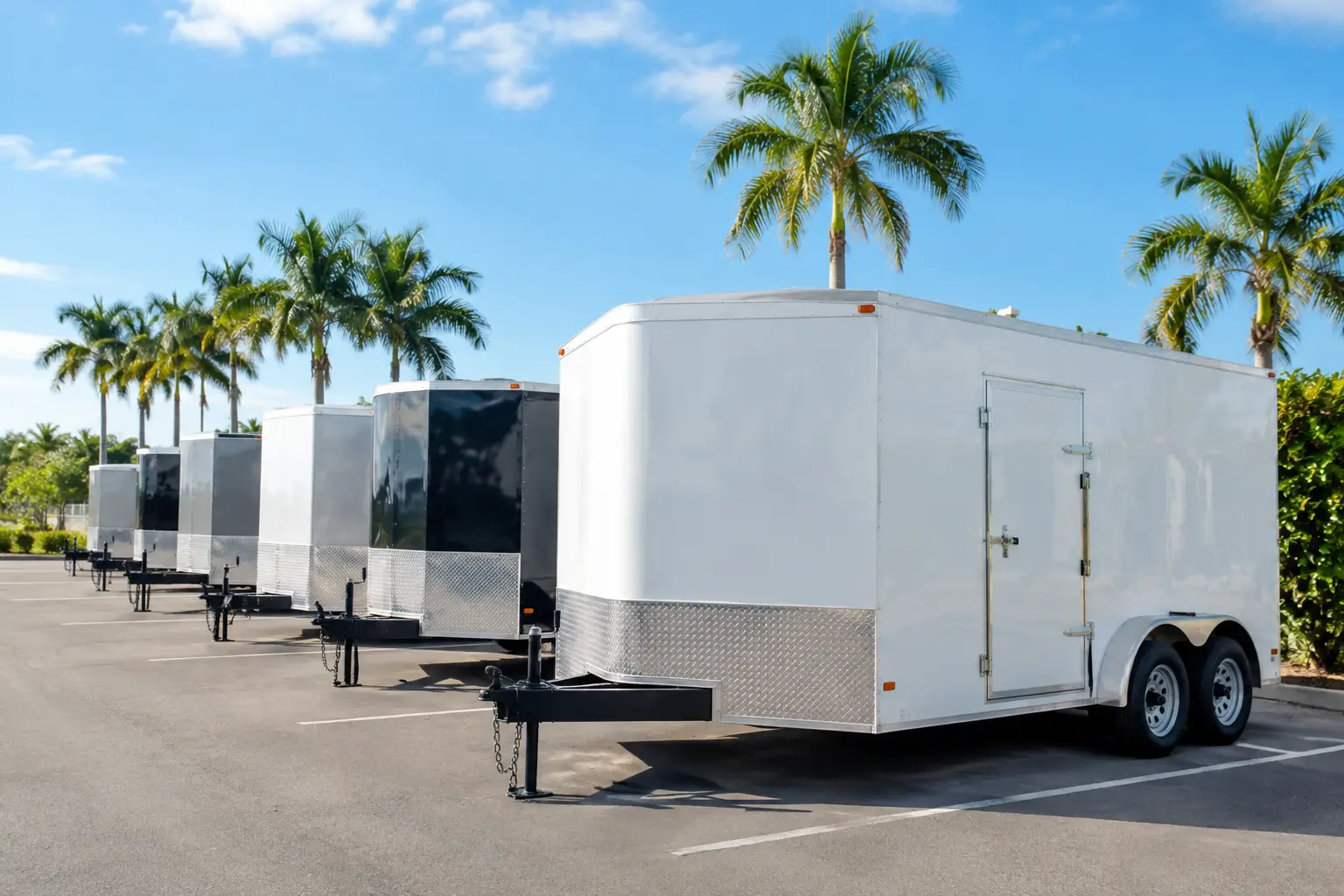
A trailer in the driveway can quickly become a neighborhood issue. Leaving it on the street can mean restricted parking, limited visibility, and the need to move it before a trip, job, or inspection. Trailer parking Hollywood FL owners can count on should solve that problem without sending them into a long contract or an unclear parking quote.
For boat trailers, utility trailers, enclosed cargo trailers, and work equipment, the practical question is simple: where can you park it in a paved, organized space that you can access when you need it? A professionally managed outdoor lot provides a more dependable answer than rotating between a driveway, a side street, and borrowed space.
What Good Trailer Parking in Hollywood FL Looks Like
Not every open lot is suitable for a trailer. South Florida weather, busy roads, and local parking restrictions make the condition and management of the property matter. A reasonable rate is important, but so are the details behind it.
Start with the surface. A paved parking space is easier to use than an uneven field or a loose gravel lot, particularly when backing in, connecting a vehicle, or checking equipment after heavy rain. An assigned, numbered space also removes a common source of frustration: arriving to find that someone has taken the spot you expected to use.
Security and oversight matter, too. Look for a fully fenced property with gated entry, camera monitoring, and local management. Cameras and gates are not a substitute for owners securing their own trailer couplers and cargo, but they create an organized environment where the lot is actively managed rather than left unattended.
Clear pricing is the other part of the equation. Some traditional national chain quote a low starting rate, then add administrative fees, insurance requirements, long commitments, or rate changes that are hard to anticipate. Good parking should show the price for the actual space, explain the rental term, and make the rules available before payment.
Match the Space to Your Trailer and Tow Vehicle
The right space depends on more than trailer length. Measure the full parked footprint, including the tongue, outboard equipment, racks, or any equipment that extends beyond the trailer body. If you will leave the trailer hitched to a pickup, account for the combined length and the room needed to turn into the assigned space safely.
Utility trailers often look compact until a ramp gate is down or equipment is loaded. Enclosed trailers may need extra clearance for a rear door. Boat trailers can have longer tongues, guides, and motors that change the real dimensions. Before reserving, confirm that the vehicle category and overall length fit the selected space and follow the location's parking rules.
This is also where exact-space selection helps. Rather than reserving a general category and hoping for a workable spot on arrival, select an available numbered space from a live lot map. You can see what you are reserving before completing the transaction. That makes it easier to choose a space that works for your parking approach and equipment.
Consider how often you will use it
A trailer used every weekend needs a different setup from one parked between seasonal projects. Frequent users should prioritize a location that is convenient to their route, job sites, marina, ramp, or home. Owners who use a trailer only occasionally may place more value on monthly cost and a secure place to keep it out of the way.
For commercial operators, access and turnaround time can affect the workday. A contractor with a utility trailer or a service company with cargo equipment needs an organized place to park after hours and retrieve equipment without a call center, a paperwork delay, or a search for an open stall.
A Straightforward Way to Reserve a Trailer Space
Trailer parking should not require a tour, a stack of forms, and several phone calls. The reservation process works best when the information is clear from the start.
First, choose the Hollywood location and identify the type of trailer or vehicle you plan to park. Provide accurate vehicle details, including length and any relevant equipment. Then select an open numbered paved space from the lot map, review the rate and terms, and pay online.
After the reservation is complete, gate-access information is sent by email and text. That is the point of a digital reservation system: you know your space, your price, and your next step before heading to the lot. Reserve it. Park it. Simple.
Qualcon Spaces uses this assigned-space approach for eligible trailers and vehicles, with flexible daily and month-to-month options. It is a practical fit for owners who need dependable parking without committing to a long contract.
Daily Parking or Month-to-Month Parking?
The best rental term depends on why the trailer needs a place to sit. Daily parking can make sense for a short project, a trip, a temporary driveway restriction, or a brief gap between launches. Month-to-month parking is often a better value for owners who regularly need their driveway back or run a business that uses trailers throughout the year.
Month-to-month does not mean an open-ended obligation. It means the arrangement can match real life. A landscaping company may need space during its busiest season. A boat owner may want a consistent place near the water during the months they launch most. A homeowner may need trailer parking while completing a renovation. Flexible terms help avoid paying for a year of parking when the need is shorter.
Still, short-term flexibility is not the only consideration. If you rely on the trailer every week, reserving a consistent assigned space can be worth more than chasing the cheapest temporary option. Predictability saves time, and it reduces the chance that your equipment ends up parked somewhere it should not be.
Protect Your Trailer While It Is Parked
A gated, monitored lot adds a useful layer of protection, but every owner should take responsibility for their own equipment. Use a quality coupler lock when the trailer is unhitched. If the trailer carries valuable tools, remove portable items when possible and secure doors, ramps, and parking compartments before leaving.
Check tire pressure, lights, hitch components, and straps periodically. South Florida sun, heat, rain, and salt air can wear on tires, wiring, seals, and exposed metal. A trailer that stays parked for weeks should not be forgotten until the morning it is needed for a job or launch.
Keep the space orderly as well. Parking lots work better when each customer stays within their assigned lines, keeps the trailer road-ready, and follows facility rules. Those basic habits protect access for everyone and help maintain the professional condition of the property.
Questions to Ask Before You Park
Before reserving, confirm whether your trailer type is permitted, whether its full length fits the available space, and what access features apply at that location. Ask how gate information is delivered, what documentation is needed for the vehicle, and whether daily or month-to-month terms best suit your schedule.
It is also smart to understand the rate before you enter payment details. The total should be easy to identify, without vague add-ons appearing later. If a facility cannot plainly explain its parking rules, space assignment, and pricing, it may not be the right place for equipment you depend on.
A well-chosen parking space does more than get a trailer off the street. It gives you a reliable home base, keeps your driveway usable, and makes the next workday, launch day, or road trip easier to start.