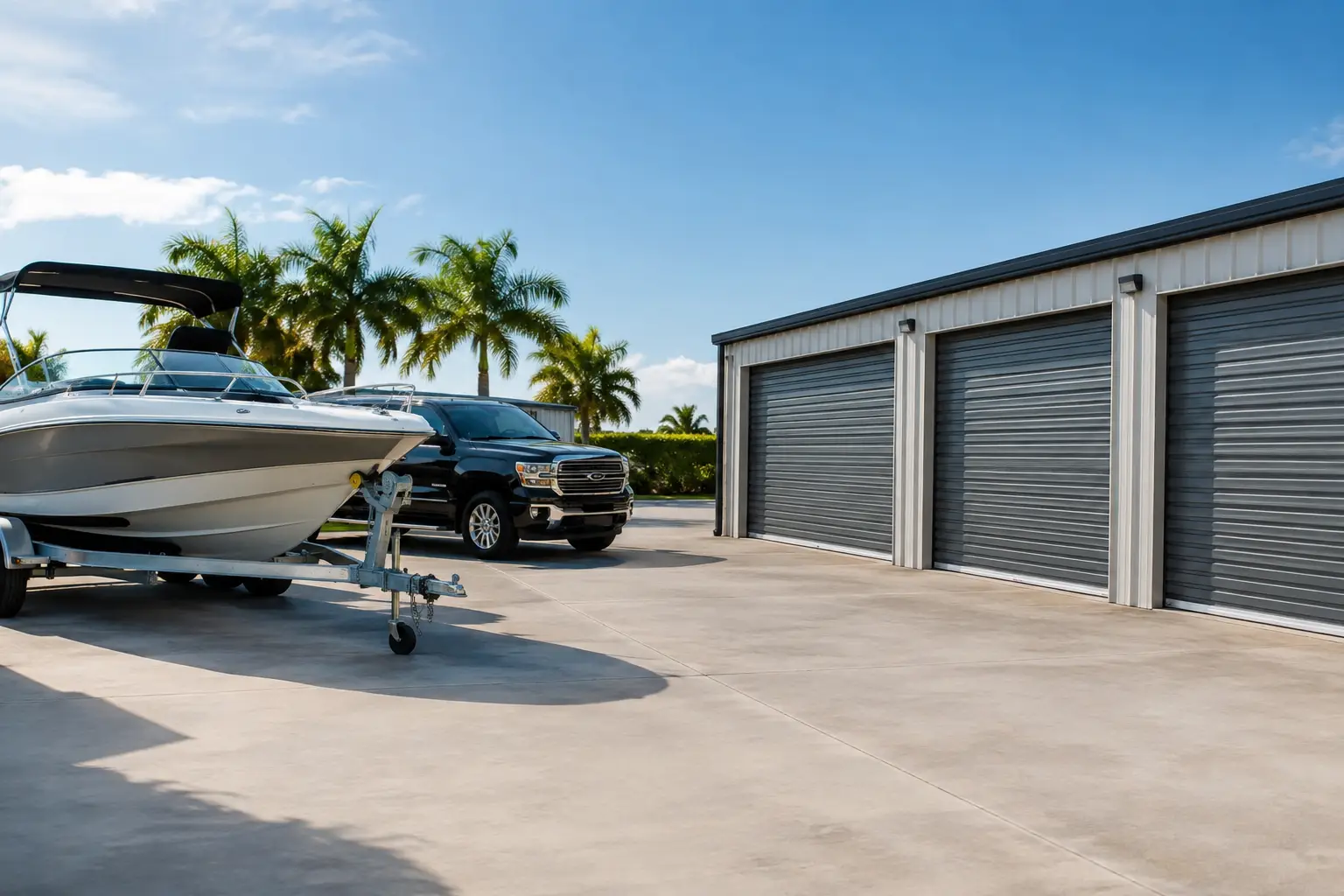
A boat trailer cannot wait for a convenient lease end date. Neither can a work van between jobs, an RV after a weekend trip, or a second car when your driveway is full. No contract vehicle parking gives South Florida owners a practical place to park without committing to a long, expensive parking agreement that no longer fits their schedule.
For many owners, the question is not whether they need space. It is whether they can get a secure, accessible space with clear terms and a price that makes sense month after month. That is where flexible outdoor vehicle parking earns its value.
What No Contract Vehicle Parking Actually Means
No contract does not mean no rules. It means you are not locked into a long-term lease just to secure a place for your vehicle, trailer, or equipment. Flexible facilities commonly offer daily or month-to-month rental terms, allowing you to reserve space for the period you need and adjust when your plans change.
That matters in coastal Florida. Boat owners may need trailer parking during boating season, while hurricane preparation, travel, construction work, seasonal residence, or a vehicle sale can create shorter-term parking needs. A fixed annual agreement can be hard to justify when your need may last a few weeks or a few months.
Look closely at the terms behind the phrase. A straightforward no contract vehicle parking option should explain the rental period, renewal process, payment timing, access conditions, cancellation requirements, and vehicle rules before you reserve. Flexibility works best when the facility is just as clear about its expectations as it is about its availability.
Why Flexible Parking Is Useful in South Florida
Driveways, condo lots, apartment communities, and neighborhood streets are rarely designed for extra vehicles. Add a boat on a trailer, utility trailer, cargo trailer, commercial van, box truck, pickup, or motorhome, and parking can become a daily problem instead of an occasional inconvenience.
In Riviera Beach and nearby boating areas, trailer parking is often the missing piece. Keeping a trailer at home can take up a driveway, violate community rules, or make it harder to get out early for a launch. A designated off-site space gives the trailer a consistent home while keeping your property usable.
In Hollywood, commercial vehicle owners face a different version of the same issue. Tradespeople, delivery operators, and small business owners may need room for a service van, work truck, or trailer near Downtown Hollywood without paying for a warehouse lease or leaving a vehicle on the street. An assigned outdoor space can be the simpler answer.
Flexible terms are also useful when life is in transition. Maybe you are moving, clearing a garage, traveling for several months, waiting on a home renovation, or deciding whether to keep a vehicle. You should not have to sign a lengthy agreement just to solve a temporary parking problem.
Assigned Spaces Beat “Park Where You Can”
Not all outdoor parking works the same way. Some lots use general overflow parking, which can mean arriving to find a different layout, limited maneuvering room, or uncertainty about where your vehicle belongs. For owners who need regular access, that uncertainty gets old fast.
An assigned, numbered space changes the experience. You select a specific available space, know where your vehicle will be parked, and return to the same location each time. It is a simple detail, but it makes a lot easier to use, easier to manage, and easier to monitor.
Paved spaces matter, too. South Florida rain, heat, and day-to-day traffic can turn poorly maintained outdoor lots into a mess. A paved, organized parking area is more practical for loading, unloading, hitching a trailer, and checking on a vehicle. It also gives operators clearer lines for vehicle placement and safe circulation.
Before reserving, confirm that the space dimensions fit the full vehicle or trailer, including tongue length, racks, bumpers, and any equipment that extends beyond the main body. A space that fits a boat hull may not fit its trailer setup. The same is true for a work truck with ladder racks or a motorhome with rear accessories.
Security Should Be Visible and Operational
Outdoor vehicle parking cannot eliminate every risk, but the facility should make it clear how the property is managed. A fully fenced lot, controlled gate access, camera monitoring, numbered spaces, and professional oversight are practical features, not decorative selling points.
Access information should be provided directly after reservation, with gate instructions that are easy to follow. That is especially useful when you need to pick up a trailer early, return from a job site, or park after a long drive. Check the posted gate hours and any location-specific access rules before booking. The right lot is one that works with your actual schedule, not just its advertised availability.
Security also depends on the customer doing their part. Lock trailers properly, remove valuables from vehicles, secure loose equipment, and keep registration and insurance current. A managed lot provides structure, but owners should still park responsibly and follow site rules.
How to Reserve Without the Usual Back-and-Forth
The best no-contract option should not require phone tag, vague availability updates, or a sales appointment just to learn whether a space is open. A digital reservation process lets you handle the essentials before you arrive.
Start by choosing the location that makes sense for where you live, work, boat, or travel. Then identify the type and dimensions of the vehicle. This step is worth taking seriously. Entering accurate details helps match your vehicle to an appropriate space and prevents problems at move-in.
Next, select an open, numbered space from the lot map. Exact-space selection is useful because you can see what you are reserving rather than accepting an undefined spot somewhere on the property. Review the per-space price, rental term, and rules, then complete payment online. Once approved, access details can be sent by email and text so you have the information when you need it.
That is the model Qualcon Spaces uses for outdoor parking in Riviera Beach and Hollywood: choose the space, provide vehicle details, reserve online, and receive the information needed to park. It keeps the process direct while maintaining the records and site standards a professionally managed lot requires.
Compare the Full Cost, Not Just the Advertised Rate
Traditional parking facilities may advertise an introductory price, then add administrative fees, protection plans, required commitments, or rate changes after move-in. A low starting number is not always the lower-cost option.
Ask what you will pay for the specific space, when charges recur, and whether there are mandatory fees beyond the stated rate. Clear per-space pricing makes it easier to budget for a trailer, work vehicle, or seasonal parking need. It also helps small business owners calculate operating costs without surprises.
There is a trade-off. A flexible outdoor space may not provide the enclosed, climate-controlled protection of an indoor unit. If you need to keep a high-value collector vehicle, sensitive equipment, or items that require climate control, a different type of facility may be appropriate. But for road-ready vehicles, trailers, boats on trailers, and commercial equipment that need accessible outdoor parking, paying for an indoor-style parking model may not be necessary.
Before You Park, Check These Practical Details
Confirm that your vehicle category is permitted at the specific location. Some lots accommodate cars, SUVs, pickups, boats on trailers, utility and cargo trailers, commercial vans, box trucks, and motorhomes, while local rules and space availability can affect what is accepted.
Make sure your vehicle is operable if the facility requires it, fits fully inside the marked space, and does not block drive lanes or neighboring spaces. Keep your account information current and follow any notice requirements if you plan to end the rental. These basics protect access for everyone using the property.
The right parking arrangement should feel straightforward: a known space, understandable pricing, practical security, and terms that match the time you actually need. When your vehicle needs a place to go, reserve the space that lets you park it without making a longer commitment than necessary.