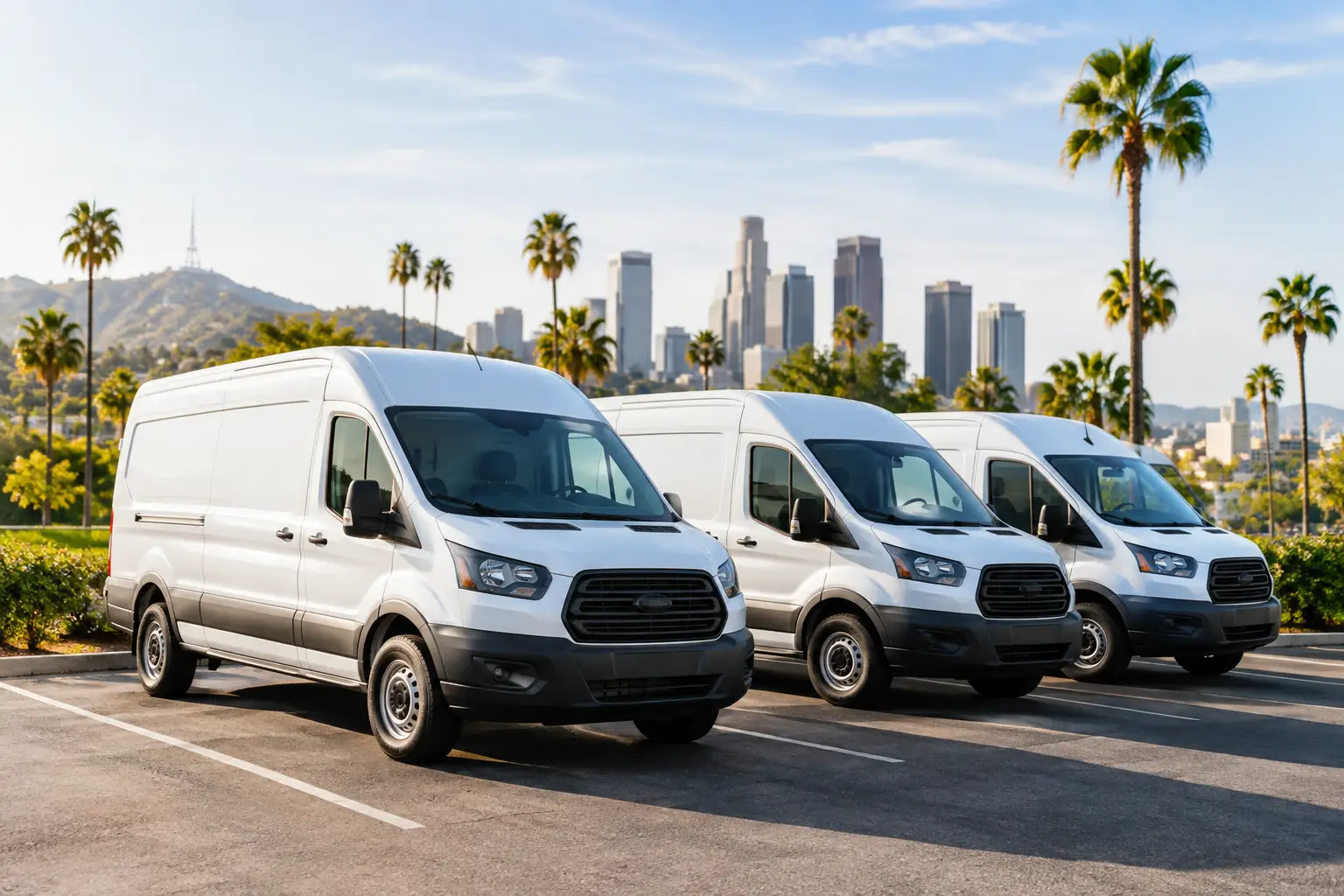
A commercial van parked at home, behind a job site, or circling downtown after hours is not a small inconvenience. It costs time, creates neighbor and HOA issues, and leaves expensive equipment exposed. Commercial van parking Hollywood operators can count on should be straightforward: a paved assigned space, controlled access, clear rules, and pricing that does not change after the first conversation.
For plumbers, electricians, HVAC crews, delivery operators, mobile detailers, and independent contractors, the right parking arrangement protects the workday before it starts. You know where the van will be, how to get to it, and what you are paying for the space.
Why Commercial Van Parking in Hollywood Is a Business Need
A commercial van is more than transportation. It may carry ladders, tools, inventory, parts, wrapped branding, or a full mobile workspace. Leaving it on a residential street can bring towing risk, parking restrictions, complaints, and unnecessary attention. Apartment communities and many residential neighborhoods also limit commercial vehicles, oversized vehicles, or overnight parking.
Street parking near Downtown Hollywood can be especially unpredictable. Availability changes with events, beach traffic, construction, and time-of-day restrictions. A paid lot may work for a quick appointment, but it is rarely a practical long-term base for a work van.
An assigned off-street space gives a small business a repeatable routine. Park after the last call. Return before the first call. Keep the van off residential streets and out of the daily search for a legal place to leave it. That consistency matters whether you operate one vehicle or are coordinating several drivers.
What a Practical Van Parking Space Should Include
Not every parking lot is set up for commercial vehicles. Before reserving, confirm that the space and facility rules fit your actual van, not just its general vehicle category. A compact cargo van, high-roof Sprinter-style van, extended-wheelbase Transit, and passenger shuttle can have very different clearance and turning needs.
Start with the space itself. A numbered, assigned paved space means you are not arriving after a long day hoping an open spot remains. You select the exact available space, and that space is yours for the rental period. Paved parking also provides a cleaner, more stable surface than grass, sand, or an unmarked overflow lot.
Security and management matter too. A fully fenced property with gate-controlled entry and camera monitoring is a better fit for a work vehicle than an open lot with no visible oversight. Cameras do not replace smart vehicle security, and no facility can guarantee against every incident. Still, controlled access, clear site rules, and professional management create a more accountable environment than leaving a van on the street.
Access is another practical detail. A space is only useful if it supports your schedule. Check the location's access terms before booking, particularly if your crew starts early, returns late, or needs weekend availability. Also confirm whether you need room to load, unload, or move equipment around the vehicle. Parking is not the same as using the lot as a work yard.
Choose the Right Space Before You Reserve
The fastest way to avoid a bad fit is to measure the van and be honest about how it is used. Include the full length of the vehicle, mirrors if they extend beyond the body, roof racks, ladders, rear steps, and trailer hitches. If you tow a utility trailer, treat the combination as a separate parking need rather than assuming it will fit behind the van.
A standard cargo van may fit comfortably in a conventional space, while an extended van may need a longer option or a specific layout that allows easier entry and exit. If the van has a high roof, review height conditions around the gate and any covered areas. For a fleet, consider whether drivers can enter and leave without blocking neighboring spaces.
Vehicle use also affects the right choice. A van that remains parked overnight and leaves each morning has different needs than one that returns between jobs throughout the day. A service business with tools inside may prioritize a gated, monitored facility. A delivery operator may care most about fast access and a convenient location near regular routes. There is no one-size-fits-all answer, but the right space should support the way the vehicle actually earns money.
A Clearer Way to Reserve Commercial Van Parking Hollywood
Parking arrangements often become difficult when availability is vague and the rate is not fully explained until later. A digital reservation process removes much of that friction. Instead of calling around to ask whether a lot has room, you can review a live lot map, choose an open numbered space, provide the vehicle details, and pay online.
At Qualcon Spaces, the process is built around that direct path. Select the Hollywood location, identify the commercial van, choose an available space, and complete the reservation. Gate-access information is then sent by email and text. There is no need to wait for a call center to assign a space you have not seen.
That level of visibility is useful for owner-operators and fleet managers alike. You can document the space number, keep payment records organized, and give authorized drivers clear parking instructions. For a business adding a vehicle, it also makes planning easier because you can see availability before committing.
Flexible daily and month-to-month terms can be a better fit than a long contract, particularly for seasonal work, temporary projects, or a growing fleet. The trade-off is that flexible parking is not a substitute for guaranteed long-term industrial yard capacity. If you need vehicle repairs, outdoor fabrication, hazardous-material parking, or frequent heavy loading, look for a property specifically approved for those activities.
Know the Rules Before the Van Arrives
Good parking works when the rules are plain. Vehicle information should be accurate at booking, including the make, model, color, plate number, and commercial use where requested. That helps property management match vehicles to assigned spaces and address access issues quickly.
Read the facility rules on vehicle condition, insurance, access, prohibited activity, and permitted vehicle types. A commercial van used for legal business transportation is different from a disabled vehicle, a van being repaired on-site, or a vehicle being used for overnight occupancy. Most parking properties restrict mechanical work, fluid disposal, prolonged idling, and parking outside the vehicle. Those restrictions protect neighboring customers and keep the site orderly.
Do not assume a parking space includes power, water, dumping access, package receiving, or workspace rights. Ask before reserving if any of those features are essential to your operation. Clear expectations are better than a low advertised rate followed by rules that do not work for your business.
Compare the Real Cost, Not Just the Monthly Rate
The cheapest-looking option is not always the least expensive in practice. Free street parking can lead to tickets, towing exposure, time spent searching, and a van parked far from where you need it. Traditional vehicle-parking facilities may offer amenities you do not need while charging higher rates, adding administrative fees, or requiring longer commitments.
When comparing commercial van parking, look at the full arrangement: whether the space is assigned, whether the price is clearly stated per space, what access controls are in place, how easy it is to reserve, and whether the rental term matches your workload. A professionally managed paved lot can provide the structure a business needs without paying for a premium parking package built for a different type of customer.
For more than one van, calculate the operational savings as well. If drivers lose 10 or 15 minutes each day finding legal parking, the cost adds up quickly across a week. A dependable parking location can reduce that wasted time and make the start and end of each shift more predictable.
Set Up a Better End-of-Day Routine
Once you reserve a space, make it part of the business routine. Give drivers the space number, gate instructions, and a simple rule for reporting any issue. Keep valuables out of sight, lock the vehicle, and avoid leaving loose equipment around the space. If vehicle details change, update them promptly so the lot record stays accurate.
A commercial van should finish the day where it can start the next one without drama. Choose a space that fits the vehicle, review the access and site rules, and reserve the exact spot you can rely on. Pick your space. Park it. Get back to work.