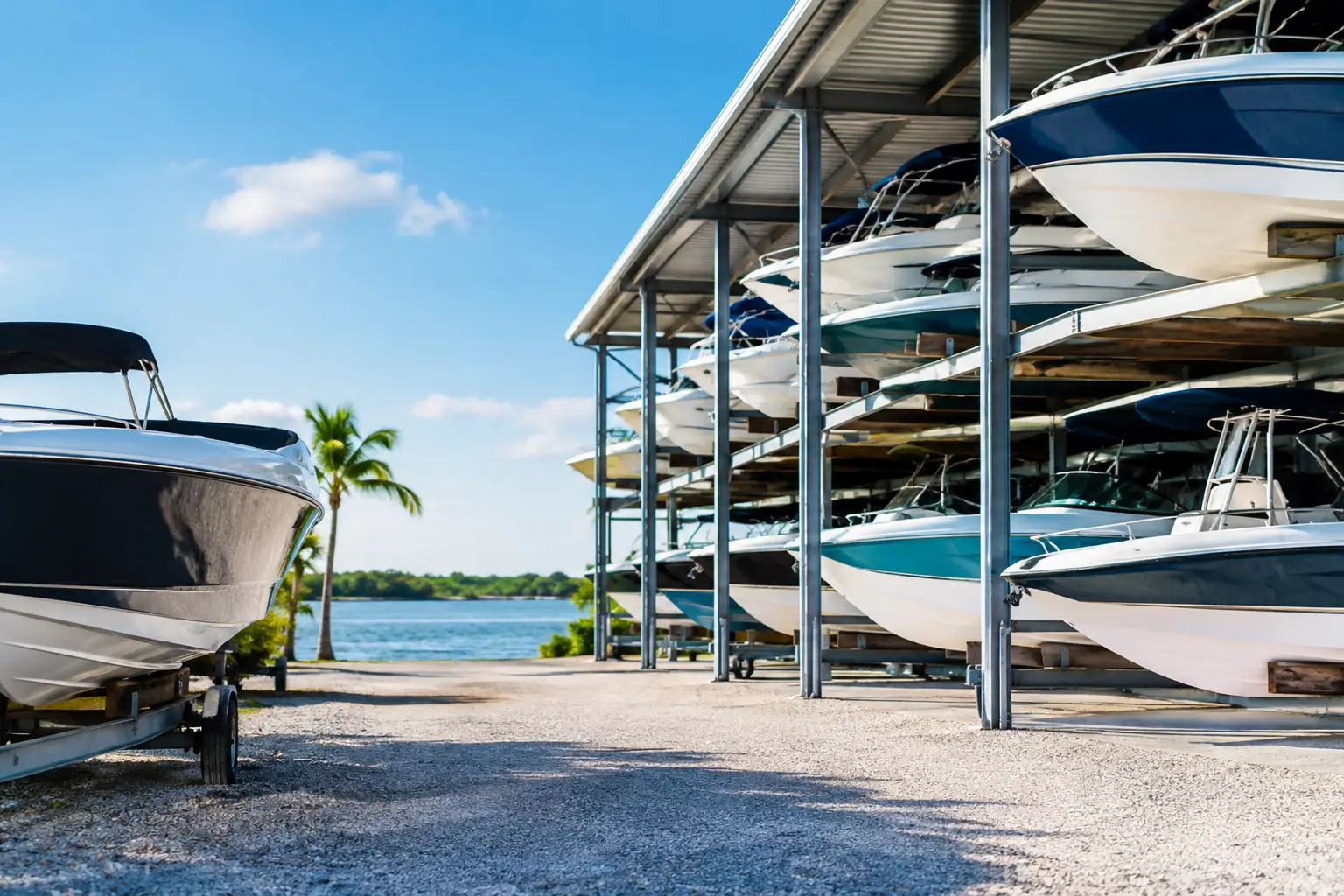
A boat can make a perfect Florida weekend feel easy. Finding a legal, accessible place to keep the trailer when the trip is over is usually the harder part. Affordable boat parking Florida owners can rely on is not simply the lowest posted monthly rate. It is a space that fits the trailer, has clear access rules, gives you confidence when the boat is parked, and does not add surprise fees after you reserve.
For many South Florida boat owners, driveway space is limited, HOA rules are strict, and marina parking can be priced like a premium service. A well-run outdoor parking space can be the practical middle ground: organized trailer parking, straightforward terms, and access when you need to hitch up for the next launch.
What affordable boat parking should actually include
Low price matters, but the total cost is what counts. Some parking facilities advertise an introductory rate, then add administrative charges, mandatory insurance requirements, deposits, annual commitments, or rate changes that are difficult to track. A lower monthly number does not help if the final bill is unclear or the space does not work for your trailer.
Start with per-space pricing. You should know what space you are renting, what vehicle type is allowed, how long you are committing to, and whether any one-time fees apply before payment. Month-to-month or daily options can make more sense than a long contract if your boating schedule changes with the season, travel plans, or a pending sale.
Affordable parking also needs to save time. A lot that is far from your preferred marina or public ramp may look inexpensive until every launch day starts with a long cross-county drive. For boaters near Riviera Beach, Singer Island, Palm Beach County, Hollywood, or Broward County, location affects the value as much as the posted rate.
Check the trailer footprint before you reserve
A trailer is not just its listed boat length. The tongue, winch post, outboard position, guide poles, spare tire, and swing-away components all affect the full parked footprint. Measure the trailer from the farthest front point to the farthest rear point, then account for its width with fenders and guides included.
Ask how the lot is laid out. A numbered, assigned space gives you a defined place to return to instead of leaving you to search for room each time. That matters when you come back after a late day on the water or need to pick up the boat before sunrise. It also helps keep the property orderly, with vehicles parked where they belong rather than crowded into open drive aisles.
Paved parking is another practical factor. Florida rain can turn an unpaved lot into soft ground, especially with the weight concentrated on trailer tires. A paved space makes routine parking easier and keeps the area cleaner around the trailer. It does not replace normal trailer maintenance, but it is a better day-to-day setup than an unmanaged open field.
Before reserving, confirm whether your boat must remain on its trailer, whether personal covers are permitted, and whether the facility has rules for in-space repairs, washing, battery charging, or engine work. Most professionally managed outdoor lots are built for parking, not for a full maintenance project. Clear rules protect every customer using the property.
Security is more than a gate
A gate is a good starting point, not the whole security plan. Look for a fully fenced property, monitored cameras, controlled gate access, and visible management standards. You should also pay attention to basic organization: marked spaces, maintained drive lanes, clear signage, and a process for unauthorized vehicles. Those details show whether the lot is actively operated or simply left open after payment.
No outdoor parking operator can promise that nothing will ever happen. Boat owners should still lock the trailer coupler, secure removable electronics and gear, and maintain appropriate insurance. The goal is layered protection: your own equipment precautions plus a property designed to control access and discourage problems.
Access is part of security, too. Confirm the location's gate hours and how gate credentials are issued. A good process gives approved customers the instructions they need without making the lot broadly accessible. If you regularly launch early or return after sunset, that detail should be settled before you reserve, not discovered with a boat behind your truck.
Avoid terms that make a cheap space expensive
The best parking arrangement matches how you use the boat. A year-round angler may want an assigned monthly space close to home or the water. A seasonal resident may need flexible parking only during part of the year. Someone selling a boat may only need a clean, secure place for a few weeks while the trailer stays available for showings.
Read for three things: minimum rental periods, notice requirements, and price transparency. Long commitments are not always bad if they come with a real benefit, but they should be a choice. You should not have to accept an extended contract just to avoid a fee that was never obvious at the beginning.
Also ask whether access, space changes, late payments, and vehicle updates have defined procedures. A professionally managed lot does not need complicated rules. It needs plain rules that are consistently applied. That keeps one customer's oversized trailer, abandoned equipment, or unpaid space from becoming everyone else's problem.
Affordable boat parking Florida booking, step by step
The simplest reservation process should let you make the key decisions before you arrive. First, choose the location that works for your home, marina, ramp, or work route. Then enter accurate details for the boat trailer, including its overall length and any special features that affect fit.
Next, choose an open assigned space from a current lot map rather than reserving a vague category. Seeing the actual available space helps remove guesswork. After payment, you should receive the parking and gate-access instructions by email and text, along with the rules for the property.
That model is especially useful when you are coordinating a boat pickup, moving out of a condo with no trailer parking, or replacing an informal arrangement that has become unreliable. At Qualcon Spaces, customers select a numbered paved space online, provide vehicle details, and receive access information without a call-center runaround.
Compare parking options on the details that affect your day
When reviewing affordable boat parking, use the same checklist for every location. The questions below are more useful than a price alone:
- Is the quoted rate for a specific space, and are the full rental terms visible before payment?
- Does the space fit the complete trailer length and width, not only the boat's hull length?
- Is the property fenced, camera-monitored, gated, and professionally managed?
- Can you access the trailer during the hours that match your launch and return schedule?
- Is the lot close enough to your boating routine to remain convenient after the first month?
There is a trade-off in every choice. Covered parking may offer more weather protection but often costs considerably more and can have limited availability. Indoor parking may be worthwhile for a high-value boat or a long offseason, but it can be less convenient for frequent use. Outdoor trailer parking is often the better value for boaters who want practical access, a managed property, and a rate that leaves room in the budget for fuel, maintenance, and time on the water.
Keep the move-in process simple
Arrive with the trailer secured and vehicle information matching your reservation. Park fully within the assigned number, keep drive lanes clear, and follow the site's rules for locks, covers, and parked items. If you replace the trailer, change the registration, or sell the boat, update the operator promptly so the record stays accurate.
A dependable parking space should remove one recurring Florida headache, not create another. Choose a location with a space you can identify, terms you can understand, and access that works when the next good weather window opens. Then hitch up, head for the ramp, and spend your time on the water instead of looking for a place to park.